
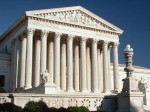
 The U.S. Supreme Court began its 2016-2017 term on October 3, 2016, with three bankruptcy issues of particular note before the Court: insider claims, structured dismissals and proofs of claim on time-barred debt.
Insider Claims
On the first day of the new term, the Court invited the Acting Solicitor General to file a brief on behalf of the U.S. on U.S. Bank N.A. v. The Village at Lakeridge — an indication the Court is considering granting certiorari.
In this case, the Ninth Circuit upheld a decision by the Bankruptcy Appellate Panel that the buyer of a bankruptcy claim was not an “insider” for purposes of confirming a Chapter 11 reorganization plan even though that buyer purchased the claim from an insider. The controversial decision could open the door for debtors seeking to circumvent the Bankruptcy Code requirement that a Chapter 11 reorganization plan be accepted by at least one class of non-insider impaired claims.
Structured Dismissals
The Court granted certiorari during the summer in Czyzewski v. Jevic Holding Corporation, where the question is whether bankruptcy courts can authorize the distribution of settlements that violate the priority scheme established by the U.S. Bankruptcy Code.
Nineteen states and the U.S. Solicitor General urged the high court to accept the case following a Third Circuit ruling that affirmed a settlement over the objection of priority parties and dismissed the Chapter 11 cases of Jevic Transportation and its affiliates. The Third Circuit’s ruling that, in rare instances, a Chapter 11 case can be resolved in a structured dismissal that deviates from the Bankruptcy Code’s priority scheme reinforced a split with the Fifth Circuit, which had ruled that a bankruptcy court cannot approve a settlement agreement with a junior creditor over the objections of a senior creditor.
Proofs of Claim on Time-Barred Debt
On October 11, 2016, the Court granted certiorari in Midland Funding, LLC v. Aleida Johnson, an 11th Circuit ruling that held Midland had violated the Fair Debt Collection Practices Act (FDCPA) by filing a proof of claim on a time-barred debt in the plaintiff’s bankruptcy case. This decision conflicted with other circuits that had found filing a proof of claim on a time-barred debt is not an FDCPA violation.
The Court will weigh two issues: (1) Whether the filing of an accurate proof of claim for an unextinguished time-barred debt in a bankruptcy proceeding violates the FDCPA; and (2) whether the Bankruptcy Code, which governs the filing of proofs of claim in bankruptcy, precludes the application of the FDCPA to the filing of an accurate proof of claim for an unextinguished time-barred debt.
The attorneys at Glass & Goldberg in California provide high quality, cost-effective legal services and advice for clients in all aspects of commercial compliance, business litigation and transactional law. Call us at (818) 888-2220, send an email inquiry to info@glassgoldberg.com or visit us online at glassgoldberg.com to learn more about the firm and to sign up for future newsletters.